The clear legal answer is this: schools can regulate hairstyles and clothing, but only within constitutional limits, and those limits are tighter than many school policies assume. Public schools, as government actors, must respect students’ constitutional rights.
Dress codes and grooming rules are allowed, but bans that are arbitrary, discriminatory, unrelated to education, or that suppress protected expression are vulnerable to legal challenge.
Private schools operate under different rules, but even they are constrained by contracts and anti-discrimination laws.
This article explains where schools have authority, where they do not, and how courts evaluate hairstyle and clothing bans under the U.S. Constitution, with a focus on real legal standards rather than policy language.
Public vs. Private Schools: Why the Distinction Matters
The constitutional analysis begins with the type of school involved. Public schools are state actors. That means their rules must comply with the Constitution, including the First and Fourteenth Amendments.
Students do not “shed their constitutional rights at the schoolhouse gate,” but those rights are balanced against the school’s educational mission.
Private schools, by contrast, are not bound by the Constitution in the same way. They generally have broader authority to set appearance standards. However, they are still limited by:
- State and federal anti-discrimination laws
- Contractual obligations in student handbooks or enrollment agreements
- Accreditation standards in some jurisdictions
Most litigation and constitutional limits discussed below apply specifically to public schools.
The Constitutional Rights Involved
First Amendment: Expression
Clothing and, in some cases, hairstyles can qualify as expressive conduct protected by the First Amendment when they communicate ideas, identity, or beliefs. Courts ask whether the student intended to express a message and whether that message would be understood by others.
Political slogans on shirts, religious attire, and clothing tied to social movements often fall into this category. Purely aesthetic choices sometimes do not, but the line is not rigid.
Fourteenth Amendment: Equal Protection and Due Process
The Fourteenth Amendment limits discriminatory enforcement and arbitrary rules. Even neutral-looking dress codes can violate equal protection if they are enforced unevenly or disproportionately affect certain groups.
Due process concerns arise when policies are vague, inconsistently applied, or enforced without clear notice.
Hairstyles: Where Courts Draw the Line
View this post on Instagram
Hair regulations have been challenged for decades, especially when they intersect with race, culture, or religion. Early cases sometimes upheld strict grooming rules, but modern courts are more skeptical, especially when policies affect protected groups.
Race and Cultural Identity
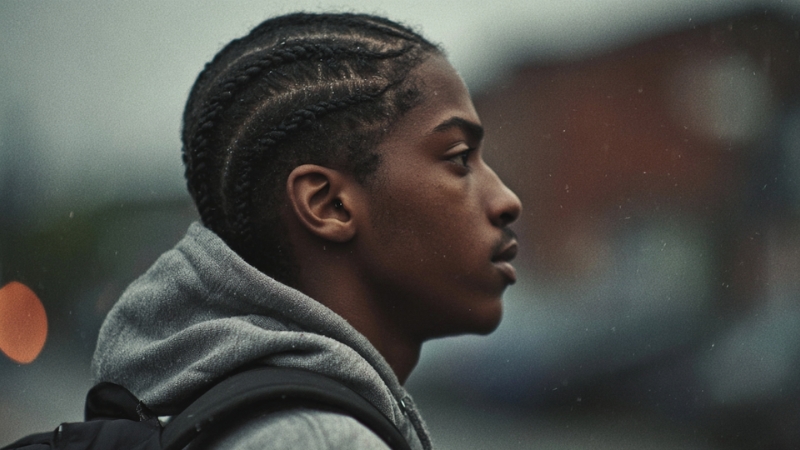
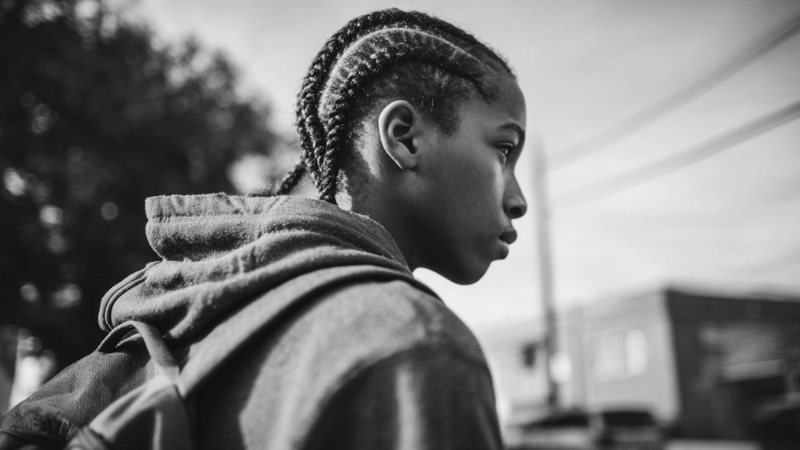
Bans on natural Black hairstyles such as locs, braids, twists, or Afros have increasingly been challenged under equal protection principles and state civil rights laws.
While federal constitutional law does not explicitly list hair texture as a protected category, courts recognize that such bans can function as racial discrimination.
In response, many states have passed versions of the CROWN Act, which explicitly prohibitdiscrimination based on natural hair and protective styles in schools and workplaces. In states with such laws, bans on these hairstyles are often unlawful regardless of the hollow justification.
Religion
Hairstyles worn for religious reasons, such as Sikh uncut hair or Jewish payot, receive strong constitutional protection.
Schools must show a compelling reason to restrict religious expression and must use the least restrictive means available. General claims about “uniformity” or “discipline” are usually insufficient.
Hairstyle Restrictions and Legal Risk
| Type of Hairstyle | Legal Risk for Public Schools |
| Natural Black hairstyles | High |
| Religious hairstyles | Very high |
| Long hair on boys | Moderate |
| Dyed or styled hair | Lower |
| Safety-related restrictions | Lower if narrowly applied |
Clothing and Dress Codes: What Schools Can Regulate
Schools have long been allowed to enforce dress codes aimed at maintaining order, safety, and a focused learning environment. However, the reason for the restriction matters as much as the restriction itself.
Commonly upheld clothing rules include:
- Bans on clothing with vulgar or sexually explicit imagery
- Restrictions on clothing that promotes illegal activity
- Safety-related rules in labs, sports, or vocational classes
Problems arise when clothing bans extend beyond these purposes.
Political and Social Expression Through Clothing
Political speech is at the core of First Amendment protection. Shirts, armbands, or clothing displaying political messages are generally protected unless the school can demonstrate a material and substantial disruption to school operations.
Mere discomfort, controversy, or disagreement is not enough. Courts require evidence that the expression caused or was likely to cause significant disruption, not just that administrators disliked the message.
Clothing Restrictions and First Amendment Analysis
| Clothing Type | Likely Protected? | Reason |
| Political slogans | Often yes | Core speech |
| Religious attire | Yes | Free exercise |
| Gang-related symbols | Often no | Safety concerns |
| Hate speech | Context-dependent | Disruption analysis |
| Uniform requirements | Often yes | Administrative interest |
Gender-Based Dress Codes and Equal Protection
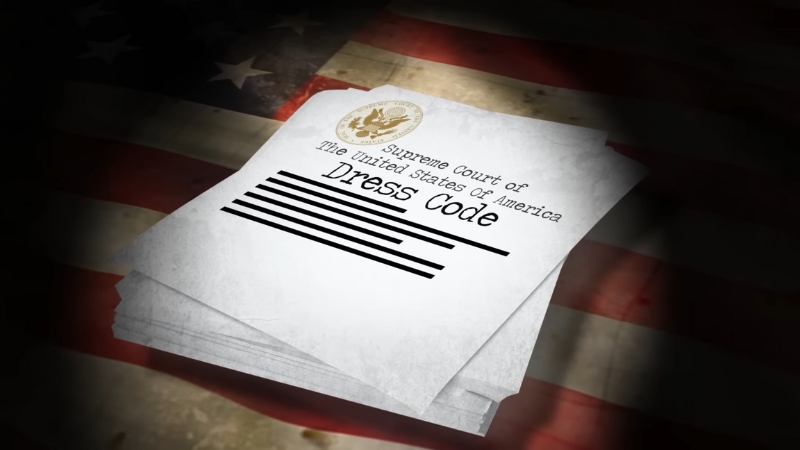
Gender-specific dress codes are one of the most legally vulnerable areas. Policies that impose different standards on boys and girls, such as skirt requirements for girls or hair length rules for boys, are increasingly challenged under equal protection principles.
Courts now ask whether gender-based distinctions serve an important governmental objective and whether the rules are substantially related to that objective. Aesthetic preferences or traditional norms usually fail this test.
Dress codes that disproportionately punish girls or gender-nonconforming students are particularly vulnerable.
Safety and Educational Justifications: When Schools Win
Schools are on the strongest legal footing when restrictions are tied to clear safety or instructional needs. Examples include:
- Requiring tied-back hair in science labs
- Prohibiting loose clothing in shop classes
- Restricting footwear that creates injury risk
Even here, policies must be narrowly tailored. Blanket bans unrelated to actual risk can still fail constitutional review.
Justifications Courts Take Seriously
| Justification | Court Reception |
| Physical safety | Strong |
| Preventing disruption | Strong if evidence-based |
| Maintaining discipline | Moderate |
| Promoting uniformity | Weak |
| Avoiding controversy | Weak |
Enforcement Matters as Much as the Rule
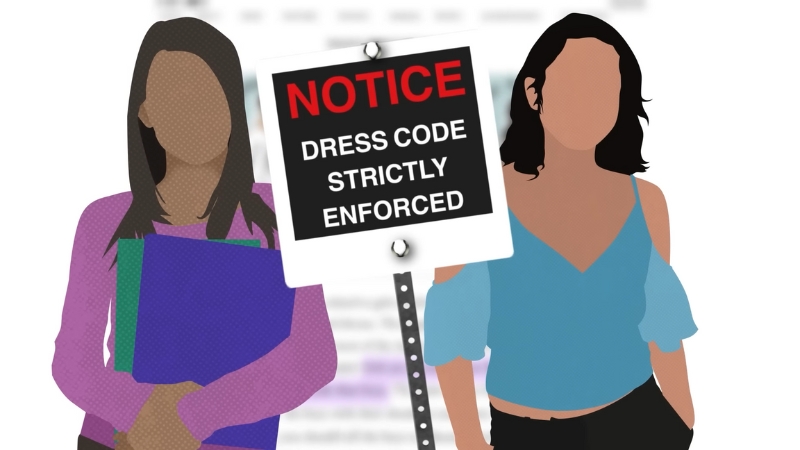
Even a lawful dress code can become unconstitutional if enforced selectively. Uneven enforcement based on race, gender, religion, or viewpoint exposes schools to equal protection claims.
Documentation matters. Schools that cannot show consistent enforcement or clear standards often lose cases, even when the underlying policy might otherwise be permissible.
Remedies and Consequences for Schools
When a dress or grooming policy is found unconstitutional, consequences can include:
- Injunctions blocking enforcement
- Policy revisions
- Monetary damages in some cases
- Attorney’s fees awarded to plaintiffs
Beyond legal risk, these cases often bring public scrutiny and community backlash.
Outcomes of Successful Challenges
| Outcome | Impact on School |
| Injunction | Policy cannot be enforced |
| Settlement | Financial and policy cost |
| Court ruling | Binding precedent |
| Policy rewrite | Administrative burden |
Private Schools: A Different but Not Unlimited Authority
Private schools generally have broader discretion to regulate appearance, especially if policies are clearly stated in enrollment agreements.
However, they may still face liability if policies violate anti-discrimination statutes or contradict contractual promises.
Parents and students can sometimes challenge private school rules through contract law rather than constitutional law.
Final Perspective
Schools do have the authority to regulate student appearance, but that authority is limited, contextual, and increasingly scrutinized.
Hairstyles and clothing are no longer viewed as purely aesthetic issues when they intersect with race, religion, gender, or political expression.
For public schools, the constitutional test is not whether a rule feels reasonable to administrators, but whether it is justified by real educational needs, applied evenly, and respectful of fundamental rights.
Policies that rely on tradition, discomfort, or vague notions of “appropriateness” are the ones most likely to fail.