

Most negative online reviews are legal and protected speech. Defamation only applies when a statement of fact about a person or business is false, presented as factual, harmful to reputation, and made without adequate factual basis.
Opinions, subjective experiences, exaggeration, and harsh criticism almost always fail as defamation claims. Courts dismiss the majority of lawsuits that try to reframe bad reviews as defamation because the legal threshold is high and tightly defined.
What Defamation Actually Means in Law
Defamation is not a catch-all term for reputational harm. In the U.S. and most common-law systems, it is a narrow cause of action with specific elements that must all be proven.
A plaintiff must show that the defendant made a false statement of fact, that the statement was published to a third party, that it caused reputational harm, and that the defendant acted with at least negligence regarding falsity.
When the plaintiff is a public figure or a business involved in a matter of public concern, the burden is higher: the plaintiff must prove “actual malice,” meaning the speaker knew the statement was false or acted with reckless disregard for its truth.
This standard comes from decades of case law, most notably U.S. Supreme Court decisions from the 1960s onward that strengthened free speech protections. Those rulings were designed to prevent defamation law from becoming a tool to silence criticism.
As a result, defamation claims fail not because courts like negative speech, but because the law deliberately protects it unless it crosses a clear factual line.
Why Most Bad Reviews Are Not Defamation
Bad reviews usually describe personal experience, dissatisfaction, or opinion. Statements such as “terrible service,” “overpriced,” or “I would not return” are not verifiable facts.
Courts consistently treat them as opinions, even when they are harsh or emotionally charged. The law draws a sharp line between factual claims that can be proven true or false and subjective judgments that cannot.
Even statements that look factual at first glance often fail scrutiny. For example, “this restaurant gave me food poisoning” may sound like a factual allegation, but if it is clearly framed as a personal belief or experience without asserting medical proof or intent, courts often classify it as opinion or unproven inference.
The context matters. Online review platforms are widely understood as spaces for subjective consumer feedback, which lowers the likelihood that readers interpret statements as proven fact.
The Core Legal Test Courts Apply
Courts do not ask whether a statement is damaging or unfair. They ask whether it meets strict criteria. The table below summarizes the elements and where reviews typically fail.
| Legal element | What the law requires | Why reviews usually fail |
| Statement of fact | A concrete, verifiable claim | Reviews are usually opinions or experiences |
| Falsity | The statement must be provably false | Many claims are unverifiable or have mixed opinions |
| Publication | Shared with a third party | This element is usually met |
| Reputational harm | Demonstrable damage to reputation | Harm is often speculative |
| Fault | Negligence or actual malice | Reviewers rarely meet this threshold |
This structure explains why threats of lawsuits are common but actual wins are rare. Meeting every element simultaneously is difficult, especially when the content is clearly opinion-based.
Opinion vs. Fact: The Line That Decides Most Cases
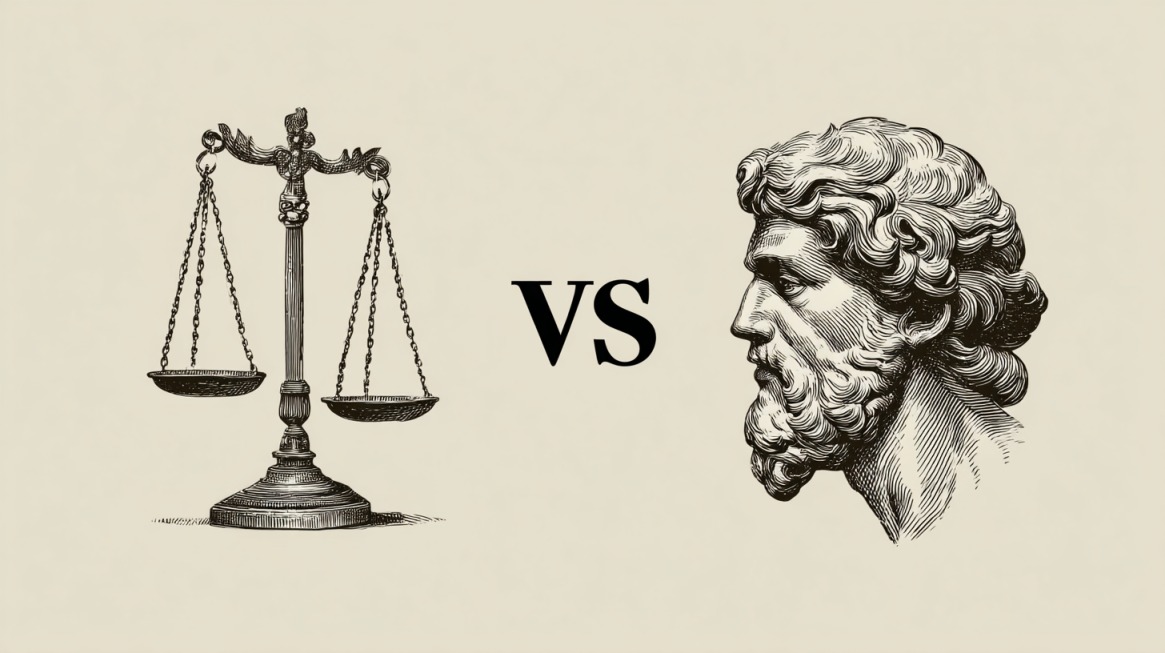
The single most important distinction in defamation law is between fact and opinion. Courts analyze wording, context, and audience expectations. A claim such as “this contractor stole my money” can be defamatory if it asserts criminal behavior without proof.
By contrast, “I feel cheated” or “this felt like a scam to me” usually survives because it signals personal perception rather than an objective accusation.
Context amplifies this distinction. A post on a consumer review site is interpreted differently from a sworn statement or a news article. Judges routinely note that reasonable readers expect exaggeration and emotional language in reviews.
That expectation protects speakers, even when statements are unkind or hyperbolic.
Courts also consider how a reasonable reader processes online criticism, recognizing that review platforms function more like a summarizer of individual customer experiences than a source of verified factual reporting, which further weakens defamation claims based on subjective statements.
Businesses vs. Individuals: Different Standards, Same Outcome
Businesses often believe they are more vulnerable to defamation than individuals, but the legal bar is often higher for them.
Courts recognize that businesses invite public evaluation. Reviews are part of commercial life. Claims about service quality, pricing, or professionalism are treated as core consumer speech.
When individuals sue over reviews, especially business owners or professionals, courts often classify them as limited-purpose public figures within their industry.
That classification raises the burden to actual malice. In practice, this makes successful claims even less likely unless there is clear evidence of intentional falsehood.
Common Claims That Almost Always Fail
Certain allegations repeatedly appear in lawsuits and almost always collapse at early stages. Statements about rudeness, incompetence, slowness, or poor value are classic examples.
So are claims that rely on unverifiable states of mind, such as “they do not care about customers” or “they are dishonest,” unless backed by concrete, false factual assertions.
Another frequent failure involves mixed statements. Courts allow opinions that imply undisclosed facts only when those implied facts are provably false and specific. Most reviews do not meet that standard because they disclose their basis: a single visit, a delayed order, or a billing dispute.
When Reviews Can Cross Into Defamation
Although rare, some reviews do cross the line. False accusations of crimes, professional misconduct, or illegal activity presented as fact are the most common triggers.
Claiming a doctor committed malpractice, a mechanic intentionally sabotaged a car, or a business laundered money, without evidence, creates legal exposure.
The table below outlines scenarios that increase risk.
| Scenario | Legal risk level | Why |
| False crime allegations | High | Criminal conduct is factual and verifiable |
| Fabricated events | High | Easily disproven false statements |
| Fake reviews by competitors | High | Evidence of intent and falsity |
| Opinion about service quality | Low | Subjective judgment |
| Hyperbolic language | Low | Readers expect exaggeration |
These cases succeed not because the speech is negative, but because it asserts false facts that can be disproven and shown to cause real harm.
Platform Protections and Their Limits
In the United States, online platforms are largely shielded from liability for user-generated content under federal law.
This protection explains why lawsuits target reviewers rather than platforms. However, this shield does not protect the individual author of a defamatory statement. Reviewers remain legally responsible for what they publish.
At the same time, platforms impose their own moderation rules. Content may be removed for policy reasons even if it is legally protected. Removal does not mean defamation occurred. It means the platform exercised private editorial control.
Why Defamation Lawsuits Often Backfire
From a practical standpoint, defamation lawsuits suing over reviews frequently causes more reputational damage than the review itself. Legal filings become public records. Media outlets often cover such cases, especially when businesses appear to silence criticism.
Courts have recognized this dynamic, and many states allow early dismissal of weak defamation claims, sometimes with cost-shifting against plaintiffs.
Statistical studies of defamation litigation consistently show high dismissal rates. Many cases end at the motion-to-dismiss stage because the statements are opinions as a matter of law. Others fail on summary judgment due to a lack of evidence of falsity or malice.
International Differences Worth Noting
Defamation law varies by country. Some jurisdictions place greater weight on reputation than free speech, making claims easier to bring.
However, even in those systems, opinion defenses still exist. Global platforms often apply the strictest standards internally to avoid cross-border risk, which explains why some reviews disappear without a court ruling.
For businesses operating internationally, this mismatch between legal standards and platform rules creates confusion. Legal removal and platform removal are not the same thing, and they should not be treated as such.
The Practical Boundary That Actually Matters
In real terms, the dividing line is simple but strict: false statements of fact presented as truth are risky; subjective experiences and opinions are not. Courts are not arbiters of fairness or politeness. They are arbiters of falsity, proof, and intent.
Most people overestimate how much the law protects reputation and underestimate how strongly it protects criticism.
That imbalance is intentional. It reflects decades of legal development aimed at preserving open discussion, especially about businesses and services that invite public evaluation.
@adamjthelawyer Defamation! With everything happening in the social media world, people are really reaching. #defamation #attorney #lawyer #lawpack #adamjthelawyer # ♬ original sound – Adam J The Lawyer
Bottom Line
Bad reviews are usually lawful, even when they are harsh, unfair, or damaging.
Defamation is a narrow legal concept that applies only when a reviewer states false facts that can be proven untrue and shown to cause reputational harm under a demanding legal standard.
The vast majority of lawsuits that try to turn negative reviews into defamation claims fail because they cannot meet those requirements.