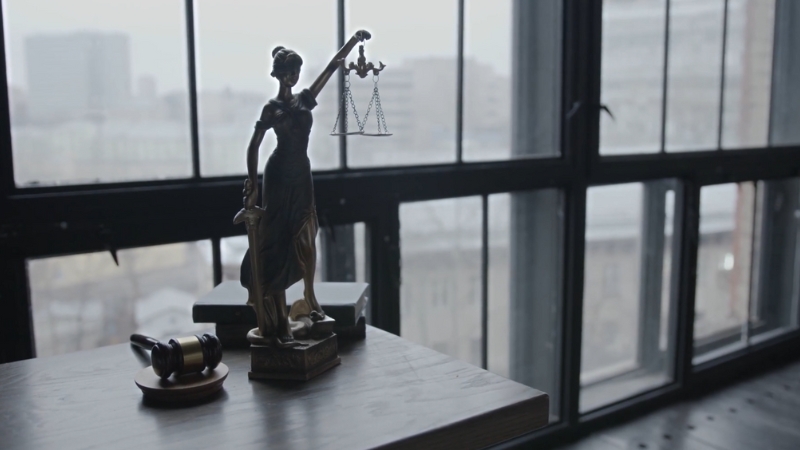
Law and justice are related but not identical. Law refers to a system of written rules enforced by institutions such as courts, police, and regulatory agencies.
Justice, by contrast, is a broader moral idea focused on fairness, equity, and what people believe ought to be right. A legal system can function correctly while still producing outcomes that many consider unjust.
Law exists to create order and predictability in society. It sets clear standards for behavior and provides formal procedures for resolving disputes.
By relying on statutes, regulations, and legal precedents, the law allows individuals and businesses to plan their actions with confidence, knowing how conflicts will be handled if they arise.
One defining feature of law is consistency. Courts are expected to apply the same rules to similar cases, regardless of personal views about fairness.
This uniformity supports stability, especially in areas such as contracts, property rights, and commercial activity, where predictable outcomes are essential.
Justice operates differently. It is not written down in a single code and cannot be enforced in the same way as a law.
Justice evaluates whether an outcome is morally right, proportionate, and fair, taking into account factors such as intent, harm caused, and social context. Because of this, ideas of justice can differ across cultures and historical periods.
Core Differences Between Law and Justice
The distinction becomes clearer when their defining characteristics are compared directly.
Aspect
Law
Justice
Nature
Formal, codified rules
Moral and ethical principles
Source
Legislatures, courts, regulators
Social values, ethics, philosophy
Enforcement
Police, courts, prisons
No formal enforcement mechanism
Flexibility
Rigid, rule-based
Contextual and adaptive
Focus
Rule compliance
Fairness and equity
Universality
Applies within a jurisdiction
Varies by culture and belief
This difference explains why legal decisions can feel unsatisfying to the public even when courts follow the law correctly.
When Law Exists Without Justice: Real Examples
View this post on Instagram
History provides clear examples of lawful systems that violated basic notions of justice.
Segregation laws in the United States were legal for decades. Under Jim Crow statutes, racial segregation in schools, housing, and public facilities was enforced by law.
Courts upheld these rules until the mid-20th century. While legal, these laws were widely unjust, denying equal treatment and dignity to millions of citizens.
Another example is mandatory minimum sentencing. In many jurisdictions, drug-related offenses carry fixed minimum prison terms regardless of individual circumstances.
Judges may believe a sentence is excessive or disproportionate, but are legally bound to impose it. The law is applied correctly, yet the outcome may violate common standards of justice, particularly when nonviolent offenders receive long prison terms.
These cases show that legality does not guarantee moral correctness.
When Justice Is Sought Outside the Law
Justice movements often arise precisely because existing laws fail to deliver fair outcomes. Civil rights protests, labor movements, and gender equality campaigns historically operated outside or against existing legal frameworks.
Participants frequently broke laws to highlight injustice, arguing that moral legitimacy outweighed legal compliance.
A common modern example is whistleblowing. In many countries, leaking classified information is illegal.
Yet public opinion often views whistleblowers as acting in the interest of justice when they expose corruption, abuse, or illegal surveillance. The act violates the law, but many argue it serves a higher moral purpose.
This tension reveals a critical point: justice can motivate legal change, but it is not confined by existing law.
Law, Justice, and Equality Before the System
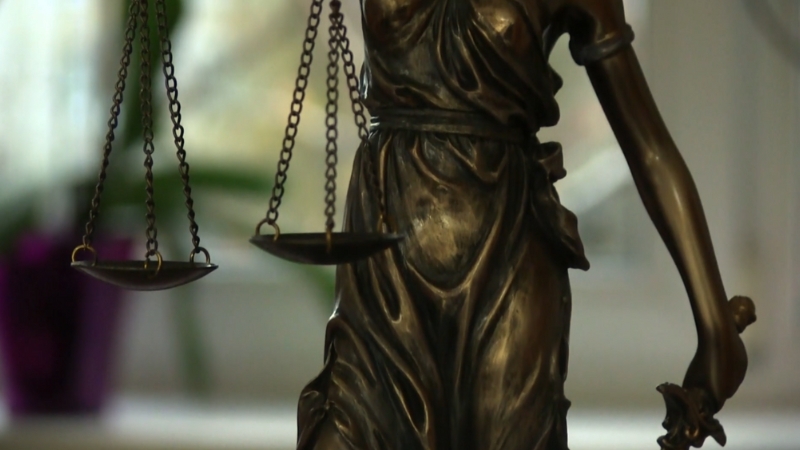
Legal systems are designed around the principle of equality before the law. In theory, everyone is subject to the same rules. In practice, access to justice is uneven. Wealth, social status, and legal representation significantly affect outcomes.
Empirical studies in the United States and Europe consistently show sentencing disparities based on race and income, even when controlling for offense severity. These disparities highlight a gap between formal legal equality and substantive justice.
The law may treat cases identically on paper, but justice requires examining whether outcomes are genuinely fair.
This difference is often summarized as the contrast between formal equality and substantive justice.
Legal Justice vs Moral Justice
Legal justice refers to the correct application of the law through proper procedures. Moral justice asks whether the result aligns with ethical standards.
Dimension
Legal Justice
Moral Justice
Standard
Statutes and precedents
Ethical reasoning
Decision-maker
Judges and officials
Society, conscience, philosophy
Consistency
High
Variable
Adaptability
Limited
High
Legitimacy source
Authority
Moral acceptance
Courts are obligated to deliver legal justice. Society often demands moral justice. Conflict arises when these standards diverge.
The Role of Judges and Discretion
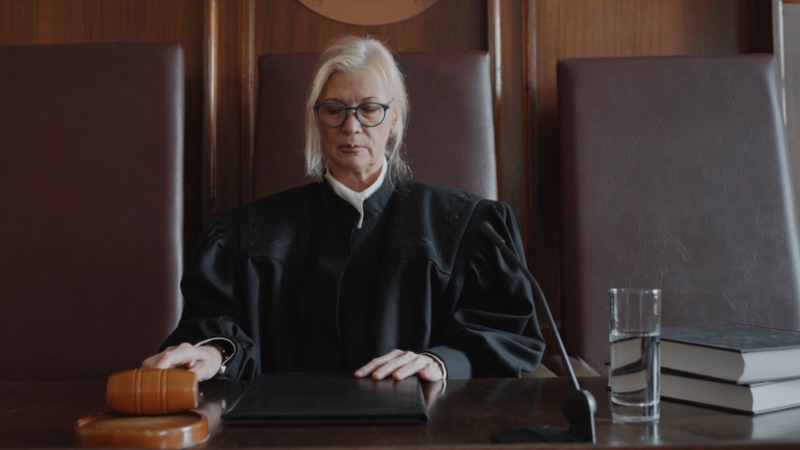
Judges operate at the intersection of law and justice. While bound by statutes, they often have discretion in interpretation, sentencing, and remedies.
This discretion exists precisely because lawmakers recognize that rigid rules cannot anticipate every circumstance.
Equitable doctrines, sentencing ranges, and mitigating factors are legal mechanisms designed to inject justice into the application of law.
However, discretion also introduces inconsistency and potential bias, which legal systems attempt to control through appellate review and guidelines.
Can Law Ever Fully Achieve Justice?
Complete alignment between law and justice is unlikely. Law requires clarity, predictability, and enforceability. Justice demands nuance, empathy, and moral reasoning. These goals often conflict.
Legal reform is typically driven by perceived injustice. Abolition of slavery, expansion of voting rights, labor protections, and civil rights legislation all followed periods where the law lagged behind justice.
In this sense, justice acts as a corrective force, pushing law to evolve.
Practical Implications in Everyday Life

Understanding the difference between law and justice matters beyond philosophy. It affects how people interpret court decisions, evaluate public policy, and respond to social movements.
It explains why someone can lose a lawsuit yet still feel morally wronged, or why a lawful action can provoke widespread outrage.
Citizens often appeal to justice when arguing for legal change, and to law when seeking order and predictability. Both are necessary, but they serve different functions.
Summary Comparison Table
Question
Law
Justice
Is it written?
Yes
No
Is it enforceable?
Yes
No
Can it be unfair?
Yes
No, by definition
Can it change quickly?
No
Yes
Who defines it?
Authorities
Society and moral thought
Final Perspective
@watsonkuhlmanllc There’s what the law says, and what the law means. The difference can change everything. #LawTalk #CriminalDefenseAttorney #LegalEducation #JusticeSystem ♬ original sound – watsonkuhlmanllc
Law and justice are related but distinct. Law provides structure and enforceability. Justice provides moral direction.
A functioning society needs both, but it must also recognize that following the law is not always the same as doing what is right. Understanding this difference is essential for evaluating legal systems, judging court outcomes, and engaging in meaningful debates about reform.