
A group chat lights up at 11:30 p.m. Someone drops a screenshot of an Instagram story. By the first period, the post has reached a counselor’s inbox. By lunch, two students are arguing in the hallway about what it meant. For school leaders, social media is not an abstract concept. It shapes mornings, attendance, counseling referrals, and safety plans.
Nearly half of U.S. teens say they are online “almost constantly,” according to the Pew Research Center’s 2024 teen tech survey.
The Centers for Disease Control and Prevention reported that 77.0% of U.S. high school students used social media frequently in 2023, defined as at least several times a day.
Federal education data shows that among students ages 12–18 who reported being bullied during school in 2021–22, 22% also reported being bullied online or by text.
School administrators sit between competing obligations. Public schools must respect students’ free speech rights. Public schools also must run safe campuses and respond to harassment when it threatens access to education.
Courts have spent decades stretching older student speech rules into the era of Snapchat, TikTok, burner accounts, and DMs.
Everything below focuses on U.S. public K–12 schools, where the First Amendment applies directly and where most student speech litigation lands.
Public Versus Private Schools
Public schools operate as government actors. The First Amendment limits when and how discipline can occur.
Private schools do not face the same constitutional limits. Contracts, handbooks, state law, and accreditation standards still matter in private education, yet constitutional student speech doctrine mainly applies to public systems.
Why Online Speech Creates Real Campus Stakes
Electronic bullying and online harassment show up in federal data alongside in-school bullying. Heavy social media use correlates with greater reports of bullying, including electronic bullying. Courts do not treat statistics as an automatic permission to punish posts.
Courts do treat the modern reality as context when deciding whether a school can prove a sufficient connection between a post and the school environment.
When judges review discipline, the core inquiry often centers on whether a post predictably entered campus life and whether concrete harm followed.
The Supreme Court Foundation For Student Speech
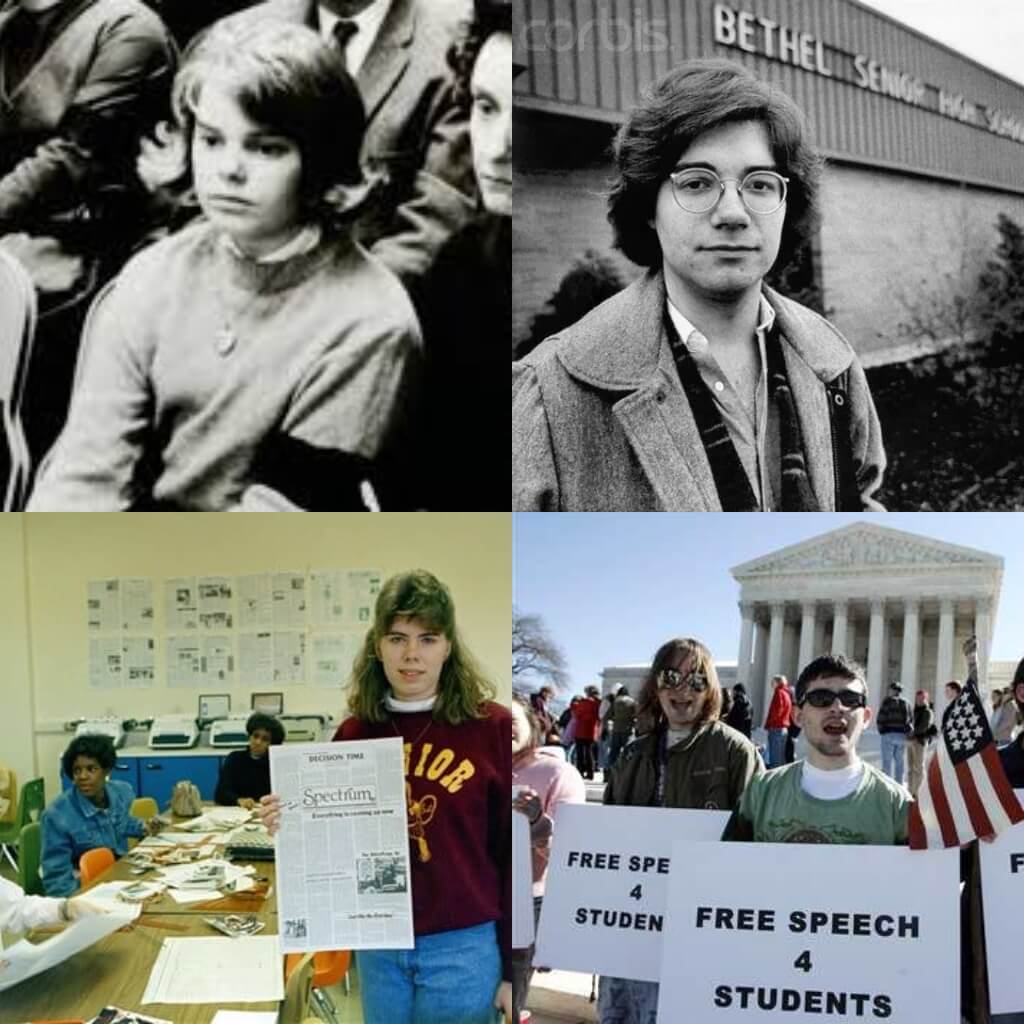
Modern social media cases still trace back to a short list of Supreme Court decisions that created the student speech framework.
Tinker v. Des Moines (1969)
Tinker introduced the standard that governs most disputes. Discipline becomes permissible when school officials can show that speech materially and substantially disrupts school operations or invades the rights of others. Courts repeatedly return to Tinker when reviewing off-campus posts that spill into school life.
Bethel School District v. Fraser (1986)
Bethel allows discipline for lewd or vulgar speech delivered in school settings. It plays a smaller role in off-campus disputes, though it can matter when posts tie directly to school assemblies, team events, or supervised school spaces.
Hazelwood School District v. Kuhlmeier (1988)
Hazelwood gives schools greater control over school-sponsored expression tied to curricular activities. School-run platforms, class blogs, or supervised online forums often fall into this category.
Morse v. Frederick (2007)
Morse upheld discipline for speech reasonably viewed as promoting illegal drug use at a school-supervised event. Online disputes sometimes raise Morse-style arguments in safety-related cases.
Quick Reference Table
| Supreme Court Case | Year | Core Rule | Role In Social Media Disputes |
| Tinker | 1969 | Discipline allowed for material and substantial disruption or invasion of others’ rights | Main test for off-campus posts |
| Bethel | 1986 | Schools can restrict lewd or vulgar speech in school settings | Used when posts tie directly to school events |
| Hazelwood | 1988 | Greater control over school-sponsored speech | Used for school-run platforms or curricular activities |
| Morse | 2007 | Schools can restrict pro-illegal-drug messages at school events | Used in narrow safety or mission arguments |
Mahanoy And Off-Campus Social Media
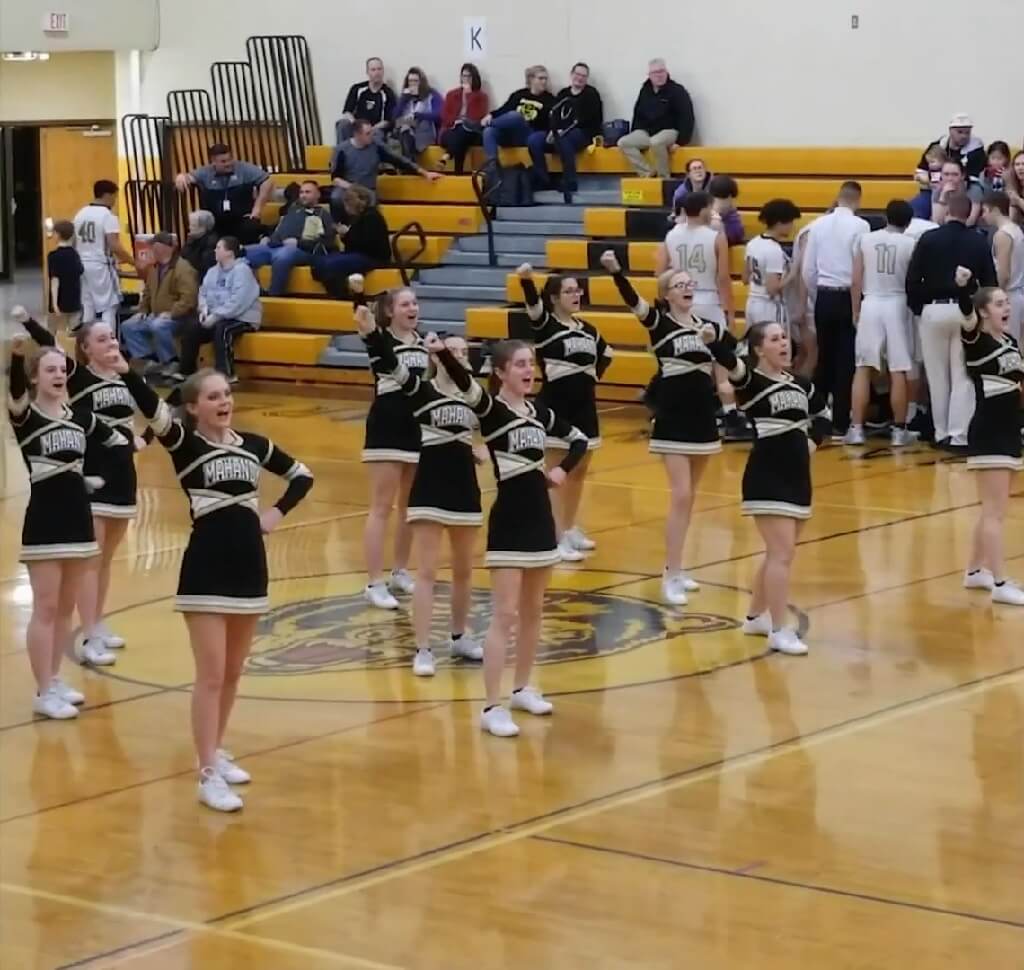
The Supreme Court directly addressed off-campus online speech in Mahanoy Area School District v. B.L. (2021). A student posted a Snapchat image criticizing cheerleading while off campus. The Court sided with the student.
Mahanoy did not offer a rigid formula. It did establish strong guardrails that tell lower courts to scrutinize off-campus discipline more carefully.
Why Off-Campus Discipline Gets Extra Scrutiny
The Court highlighted three features of off-campus speech:
- Parents hold primary responsibility off campus.
- Regulating off-campus speech risks regulating all speech, since “on campus” plus “off campus” covers every place a student exists.
- Schools have an interest in protecting unpopular expression, which the Court described as a core part of civic development.
Mahanoy also acknowledged situations where schools can have stronger regulatory interests, including serious bullying, harassment targeting individuals, threats, and speech connected to school activities.
The recurring judicial question becomes whether a tight connection exists between a post and school safety or functioning, and whether evidence of disruption or targeted harm is strong.
How Lower Courts Apply The Rules
Post-Mahanoy cases reveal several recurring patterns.
Targeted Harassment And Bullying
Chen v. Albany Unified School District (9th Cir. 2022) involved off-campus Instagram posts targeting Black classmates with racist imagery and commentary.
The Ninth Circuit upheld discipline, treating the posts as severe harassment that predictably entered campus life and harmed students there.
Courts often treat targeted harassment differently from general commentary because the school’s interest centers on protecting students’ access to education.
Practical Signal
- Posts aimed at identifiable classmates with degrading, humiliating, or threatening content create a stronger legal basis for discipline when school impact is concrete.
Impersonation, Threats, And Staff-Directed Harassment
In Kutchinski v. Freeland Community School District (6th Cir. 2023), a student created a fake Instagram account impersonating a teacher. The account turned graphic and threatening after other students joined in. Staff time and classroom functioning suffered.
The Sixth Circuit upheld discipline, emphasizing authority to address off-campus speech that foreseeably causes substantial disruption and recognizing responsibility when a student causes, contributes to, or participates in harmful conduct.
Practical Signal
- Impersonation of staff, sexual harassment, and threats often fall into high-risk categories, especially when they disrupt instruction or trigger safety planning.
Offensive Posts With Limited School Nexus
In Leroy v. Livingston Manor Central School District (2d Cir. 2025) , a student posted an off-campus image resembling the George Floyd murder. The Second Circuit held the discipline violated the First Amendment on the record presented, warning against punishing disturbing off-campus speech without strong evidence of disruption or threat.
Practical Signal
- Offensive content alone remains a weak foundation for discipline when disruption evidence is thin.
View this post on Instagram
Satire And Criticism Of Administrators
Satirical memes and jokes about school officials often lead to disputes. Courts frequently treat satire as protected expression unless evidence shows substantial disruption, targeted harassment, or threats.
Litigation involving Instagram memes lampooning a principal, such as in I.P. v. Tullahoma City Schools, illustrates the careful scrutiny courts apply.
Practical Signal
- Satire aimed at administrators can remain protected when it stays within criticism and avoids targeted harm.
Categories Of Speech That Receive Less Protection
Some categories receive less First Amendment protection even outside school.
True Threats
True threats do not receive constitutional protection. The Supreme Court’s Counterman v. Colorado (2023) decision clarified that recklessness can satisfy the mental state required in true threat cases.
For schools, posts that reasonably read as threats and that trigger safety planning become far easier to regulate.
Severe Harassment And Targeted Bullying
Mahanoy flagged serious bullying or harassment targeting individuals as a context where schools can hold stronger regulatory interests.
School-Sponsored Platforms
Speech posted on school-controlled platforms or tied to curricular activities moves closer to Hazelwood.
What Courts Examine As “Substantial Disruption”

Judges usually look for concrete evidence, not general unease.
- Repeated classroom interruptions
- Staff time diverted from instruction
- Safety actions such as threat assessments or altered schedules
- Conflicts that move from screens into hallways
- Targeted impact on identified students
Courts also evaluate whether discipline serves a neutral school interest rather than punishing an unpopular viewpoint.
A Decision Checklist For Schools
School administrators need a practical way to sort emotion from evidence when a late-night post lands on a desk and demands a fast, defensible response.
Step 1: Classify The Speech
- Threats of violence or weapons talk
- Targeted harassment of a specific student or staff member
- Impersonation, doxxing, or sexual harassment
- General criticism or political commentary
Threats and targeted harassment strengthen regulatory authority. General commentary weakens it.
Step 2: Document The School Nexus
Schools should articulate:
- How the post reached campus
- Why spread was foreseeable
- Connection to school activities or groups
Step 3: Document Disruption With Specifics
Courts give limited weight to offense or community outrage.
Step 4: Review Viewpoint Neutrality
Discipline tied to negative commentary about administrators often raises constitutional risk.
Step 5: Keep Policies Narrow
Overbroad handbook language, such as “posts that embarrass the school,” creates litigation risk.
Guidance For Students And Parents

Key points for families in public schools:
- Off-campus posts often remain protected, especially political speech or general commentary, unless schools can show a strong, specific justification.
- Discipline risk rises sharply for threats, targeted harassment, impersonation, and conduct that predictably causes serious campus disruption.
When discipline occurs, request:
- The specific rule allegedly violated
- Evidence relied upon, including screenshots and timestamps
- The stated disruption or safety rationale
- Appeal procedures
Serious allegations can affect academic records, activities, and potential law enforcement involvement. Legal counsel often becomes important quickly.
Where The Law Moves Next
Courts already face new challenges:
- AI-generated deepfakes and synthetic impersonation
- Private group chats that later spread across campus
- Threat standards shaped by Counterman and evolving safety planning
No single rule resolves every scenario. Mahanoy intentionally avoided a rigid formula. Lower courts follow a consistent pattern: discipline becomes easier to defend when posts resemble targeted harm or credible safety risks, and harder to defend when discipline appears to punish offensive, unpopular, or embarrassing speech rather than protecting campus operations.