
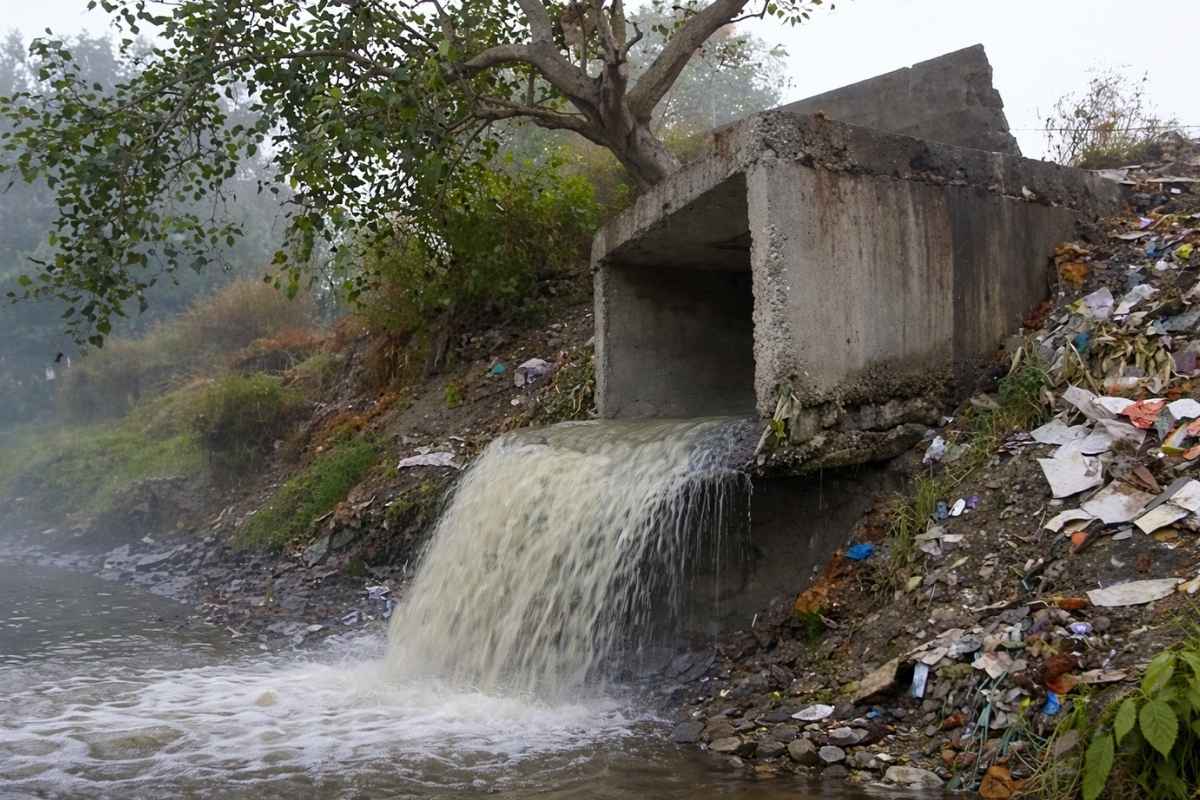
The Clean Water Act, enacted in 1972, focuses on restoring and maintaining the integrity of the United States waters by preventing pollution.
The primary goal involves reducing harmful discharges and improving water quality across rivers, lakes, streams, wetlands, and coastal areas.
National Pollutant Discharge Elimination System (NPDES) permit program plays a central role in controlling water pollution by regulating pollutant discharges. Many industrial operations must comply with permit requirements.
Let’s see what the most important facts to know about the Clean Water Act are.
When Is an NPDES Permit Required?
NPDES permit requirements apply whenever pollutants are discharged into waters of the United States through a point source.
Federal law treats these discharges as regulated activities because they can affect:
- Water quality
- Aquatic life
- Public health
Permit coverage ensures pollutant releases remain within strict limits established by law.
NPDES permit authorizes a facility or operation to discharge pollutants under controlled conditions.
Permit becomes mandatory for any activity that releases wastewater, stormwater, or other regulated substances through a defined conveyance such as a pipe, ditch, or channel.
Permits operate as enforceable agreements that require both discharge limits and responsible management practices.
Situations that commonly trigger permit requirements include regulated discharges such as:
- Industrial process wastewater is released through an outfall pipe
- Stormwater runoff associated with manufacturing or construction activity
- Treated sewage is discharged through municipal or private systems
- Runoff collected in engineered channels connected to regulated waters
Who Administers the Program
Administration of the NPDES program occurs through cooperation between federal and state governments.
The Environmental Protection Agency oversees national standards and enforcement authority. State environmental agencies, once approved, often handle permit issuance and local-level compliance oversight.
Many states operate authorized NPDES programs through their own environmental departments.
State-level agencies often manage core responsibilities such as:
- Reviewing permit applications
- Conducting compliance inspections
- Issuing enforcement actions for violations
- Coordinating regulatory reporting with the EPA
Legal Foundation
Section 402 of the Clean Water Act provides the legal authority for the NPDES permitting system.
Regulatory structure ensures pollutant discharges remain controlled and consistent with national water protection goals.
Authority granted under Section 402 allows EPA and approved states to regulate point source pollution and maintain water quality standards nationwide.
Legal framework ensures permits remain enforceable tools for protecting navigable waters, wetlands, and tributary systems.
What Counts as a Pollutant and a Discharge
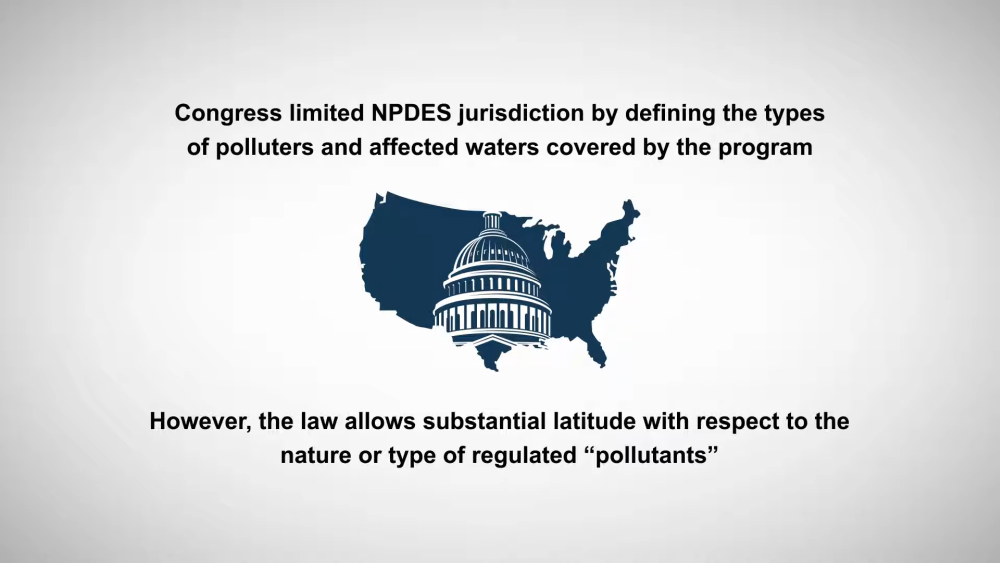
Pollutant regulation under NPDES depends on both the type of discharge and the water body receiving it. Federal definitions cover a wide range of substances and discharge activities.
Permit requirements apply when pollutants enter regulated waters through identifiable conveyances.
Point Source Discharges
Point source discharge refers to pollution released through a defined channel or system.
Regulation focuses on these direct releases because monitoring and enforcement can be applied through measurable permit limits.
Examples of regulated point sources include:
- Pipes and industrial outfalls
- Ditches and drainage conduits
- Tunnels, channels, and similar conveyances
Pollutants Regulated
Pollutants covered under NPDES include industrial waste, stormwater-related contaminants, and sewage discharges.
Many substances regulated under the program can harm water quality even at low concentrations.
Common pollutant categories include:
- Process wastewater containing chemical residues
- Stormwater runoff carrying sediment and oils
- Sewage and biological waste materials
- Industrial discharge containing metals or solvents
Waters of the United States
Jurisdiction under the Clean Water Act extends to waters connected to national commerce and ecological systems.
Waters protected under federal authority include navigable waters, tributary streams, wetlands, and some connected ditches.
Protected waters often include resources tied to:
- Drinking water supplies
- Aquatic habitat and ecosystem stability
- Interstate waterways and commerce-related waters
Who Needs an NPDES Permit
Permit obligations apply to many business sectors and regulated construction activities.
Determining permit necessity requires evaluating discharge type, location, and point source connection to regulated waters.
Businesses and Facilities
Industrial operations frequently require NPDES permits when discharges occur through regulated outlets.
Manufacturing, warehousing, food processing, energy production, and similar industries often manage process wastewater or industrial runoff.
Facilities generating regulated discharges may face responsibilities such as:
- Obtaining permit coverage before discharge begins
- Maintaining discharge monitoring systems
- Submitting compliance reports on pollutant levels
Construction and Stormwater
Construction sites disturbing one acre or more typically require coverage under a general stormwater permit.
Stormwater controls help prevent sedimentation and runoff contamination during excavation, grading, and building activity.
Permit compliance during construction often includes erosion and runoff controls such as:
- Sediment barriers and stabilized entrances
- Stormwater pollution prevention plans
- Routine inspections throughout project duration
Homeowners and Other Entities
Residential homeowners rarely fall under NPDES regulation unless discharges connect to larger commercial developments or community-scale systems.
Large-scale projects involving significant runoff infrastructure may create permit obligations.
Developments triggering regulation can include:
- Subdivision construction disturbing large acreage
- Community drainage systems tied to regulated waters
- Private wastewater systems with point source discharge outlets
Homeowners managing backyard ponds or small-scale water features that involve engineered drainage may find it useful to explore available tools and systems designed for these settings, such as those sold at places like Admiral Lake and Pond Equipment.
Types of NPDES Permits

NPDES program uses several permit structures depending on discharge complexity and regulatory category.
Permits differ in scope, application process, and monitoring requirements.
Individual Permits
Individual permits apply to facilities requiring discharge limits tailored to specific site conditions.
The permitting process involves detailed review, public notice procedures, and facility-specific compliance terms.
Individual permits often include:
- Customized effluent limitations
- Site-specific monitoring schedules
- Detailed operational control requirements
General Permits
General permits apply to categories of similar discharges, such as industrial stormwater or construction runoff.
Coverage tends to involve streamlined applications and standardized permit conditions.
General permits frequently cover:
- Construction activity stormwater discharges
- Industrial facility runoff under defined categories
- Multiple sites operating under similar discharge patterns
Stormwater Permits
Stormwater permits regulate runoff linked to construction, industrial activity, and municipal storm sewer systems.
Municipal Separate Storm Sewer Systems (MS4s) face particularly demanding compliance responsibilities due to large-scale runoff management challenges.
MS4 permit obligations often include:
- Public education and outreach requirements
- Illicit discharge detection programs
- Long-term stormwater control measures
What’s in an NPDES Permit
Permit terms establish enforceable discharge limits and compliance obligations.
NPDES permits serve as the primary regulatory mechanism controlling pollutant releases into protected waters.
Effluent Limits
Effluent limitations form the core requirement in every NPDES permit.
Limits may be technology-based, requiring treatment standards, or water-quality-based, ensuring pollutant levels do not harm receiving waters.
Limits often apply to factors such as:
- Chemical concentration thresholds
- Temperature or pH conditions
- Biological oxygen demand or nutrient loads
Monitoring and Reporting
Monitoring duties require regulated facilities to submit Discharge Monitoring Reports (DMRs) verifying compliance.
Reporting ensures pollutant levels remain documented and enforceable through inspections.
Monitoring responsibilities typically involve:
- Routine sampling at discharge points
- Recordkeeping of laboratory results
- Timely submission of compliance documentation
Operational Conditions
Operational requirements include best management practices, corrective actions, and site-specific controls.
Permit conditions often address daily procedures that reduce pollution risk and ensure long-term compliance.
Operational measures may include spill prevention steps, maintenance protocols, stormwater management systems, and corrective response actions when permit limits are exceeded.
Summary
The NPDES program protects water quality through the regulation of pollutant discharges into the waters of the United States. Requirements apply to industrial, municipal, and certain residential activities.
Compliance prevents costly penalties, supports public health, and contributes to cleaner community waters.